
Introduction
Eating the right foods in the right amounts is essential for a healthy life. A balanced diet ensures your body gets all the nutrients it needs to function properly, maintain energy levels, and prevent diseases. Understanding how to plan and maintain a balanced diet can make a huge difference in your overall health and wellbeing.
Many people struggle with eating well because of busy schedules, conflicting diet information, or unhealthy habits. A balanced diet doesn’t have to be complicated. With a clear understanding of the components of a balanced diet and practical tips, you can achieve a healthier lifestyle without stress.
What is a Balanced Diet?
A balanced diet is a diet that provides all the essential nutrients your body needs in the right proportions. These nutrients include carbohydrates, proteins, fats, vitamins, minerals, and water. Eating a balanced diet means consuming a variety of foods from all food groups to ensure your body receives everything it requires for optimal functioning.
The idea is not to focus on a single type of food but to combine foods in a way that gives your body energy, promotes growth, supports brain function, strengthens immunity, and maintains overall health. A balanced diet also means controlling portion sizes and eating the right amount of calories for your age, sex, and activity level.
Why is a Balanced Diet Important?
A balanced diet is important because it:
- Supports physical and mental health by providing essential nutrients.
- Helps maintain a healthy weight and reduces the risk of obesity.
- Strengthens the immune system to fight off illnesses.
- Promotes healthy growth and development, especially in children and teens.
- Improves energy levels and reduces fatigue.
- Prevents chronic diseases such as diabetes, heart disease, and osteoporosis.
Without a balanced diet, your body may suffer from nutrient deficiencies, leading to fatigue, poor concentration, and a higher susceptibility to illnesses.
Detailed Step-by-Step Guide to a Balanced Diet
Achieving a balanced diet involves understanding what to eat, how much to eat, and when to eat. Here’s a step-by-step guide:
Step 1: Understand Food Groups
A balanced diet includes foods from all the major food groups:
- Carbohydrates – Rice, bread, oats, and whole grains provide energy for your body.
- Proteins – Meat, fish, eggs, beans, and legumes help in muscle building and repair.
- Fats – Healthy fats from nuts, seeds, olive oil, and avocados support brain health.
- Vitamins and Minerals – Fruits and vegetables are rich in essential vitamins and minerals.
- Dairy or Alternatives – Milk, cheese, yogurt, or fortified plant-based alternatives provide calcium and vitamin D.
- Water – Hydration is essential for all bodily functions and maintaining healthy skin.
Step 2: Portion Control
Eating the right amount of food is just as important as eating the right foods. Overeating, even healthy foods, can lead to weight gain. Use these tips for portion control:
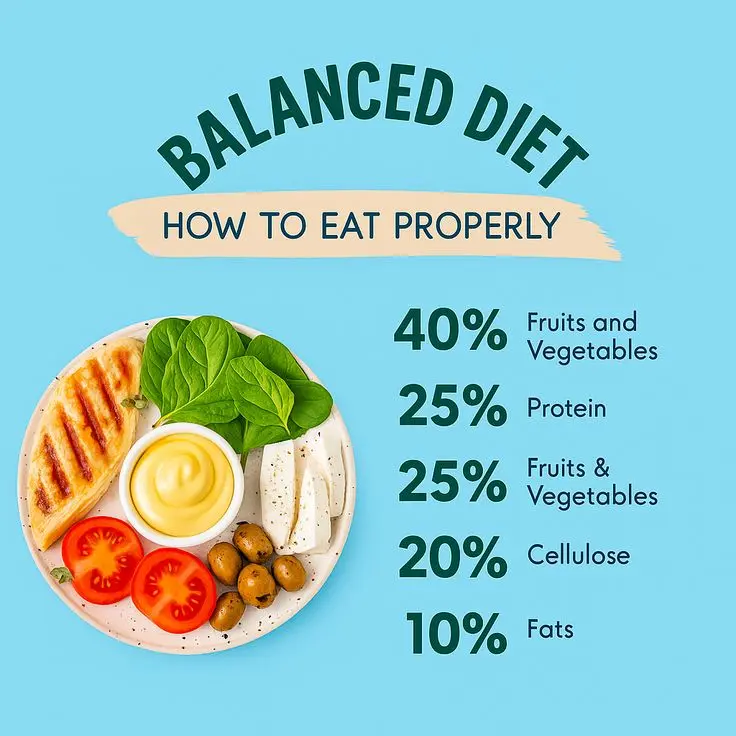
- Fill half your plate with vegetables and fruits.
- Allocate a quarter of your plate to lean protein.
- Use the remaining quarter for whole grains or starchy vegetables.
- Limit high-fat and sugary foods.
Step 3: Meal Planning
Planning your meals ahead can help you stick to a balanced diet:
- Start with breakfast, which should be rich in protein and fiber.
- Include snacks like fruits, nuts, or yogurt to avoid overeating at main meals.
- Plan dinner to be lighter than lunch, focusing on vegetables and lean protein.
Step 4: Variety is Key
Eating the same foods every day can lead to nutrient deficiencies. Include a variety of foods from each food group to ensure complete nutrition. For example:
- Swap brown rice with quinoa or whole wheat pasta.
- Rotate between chicken, fish, eggs, and plant-based proteins.
- Include different colored vegetables to cover a broad range of vitamins and minerals.
Step 5: Limit Processed and Sugary Foods
Processed foods are often high in unhealthy fats, sugar, and sodium. Limiting them helps prevent obesity, heart disease, and diabetes. Replace sugary drinks with water or herbal teas and avoid packaged snacks that are low in nutrition.
Step 6: Listen to Your Body
Pay attention to hunger and fullness cues. Avoid eating out of boredom, stress, or habit. Eating mindfully helps maintain a healthy weight and improves digestion.
Benefits of a Balanced Diet
A balanced diet offers numerous benefits, including:
- Improved Energy Levels – Proper nutrition fuels your body for daily activities.
- Better Mental Health – Nutrient-rich foods support brain function and reduce stress.
- Weight Management – Balanced meals prevent overeating and promote healthy body weight.
- Strong Immune System – Vitamins and minerals boost immunity.
- Healthy Skin and Hair – Nutrients like vitamin C, E, and biotin improve appearance.
- Disease Prevention – Reduces the risk of diabetes, heart disease, and cancer.
Disadvantages / Risks
While a balanced diet is beneficial, ignoring it or attempting extreme diets can have risks:
- Nutrient deficiencies if certain food groups are excluded.
- Fatigue or low energy from insufficient calorie intake.
- Digestive issues from lack of fiber.
- Increased risk of chronic diseases if the diet is consistently poor.
- Overeating “healthy” foods leading to weight gain.
Common Mistakes to Avoid
Even when trying to eat a balanced diet, people make these mistakes:
- Skipping meals, especially breakfast, leading to overeating later.
- Over-relying on supplements instead of natural foods.
- Ignoring portion sizes and eating too much of any food group.
- Not drinking enough water.
- Following fad diets without considering personal health needs.
- Eating too many processed or sugary foods.
FAQs About Balanced Diet
1. How many meals should I eat in a day?
It’s best to have three main meals and 1–2 healthy snacks. This helps maintain energy levels and prevents overeating.
2. Can I have a balanced diet as a vegetarian?
Yes, by including legumes, tofu, dairy, nuts, seeds, whole grains, fruits, and vegetables, vegetarians can get all essential nutrients.
3. Is it okay to eat fast food occasionally?
Yes, moderation is key. Occasionally eating fast food won’t harm your health if your overall diet is balanced.
4. How can I ensure I get all vitamins and minerals?
Include a variety of colorful fruits and vegetables, whole grains, lean proteins, and dairy. This covers most essential vitamins and minerals.
5. Can a balanced diet help with weight loss?
Yes, eating the right foods in appropriate portions can promote healthy weight loss without drastic dieting.
6. How important is water in a balanced diet?
Water is essential for digestion, circulation, temperature regulation, and nutrient transport. Aim for at least 6–8 glasses per day.
7. Should I take supplements if I have a balanced diet?
If your diet is well-rounded, supplements may not be necessary. Consult a doctor if you have specific deficiencies.
8. How long does it take to see results from a balanced diet?
Positive effects like better energy, improved digestion, and clearer skin can appear in a few weeks, while weight management and disease prevention take longer.
Expert Tips & Bonus Points
- Plan Ahead: Meal prep for the week to avoid unhealthy food choices.
- Keep Healthy Snacks Handy: Fruits, nuts, and yogurt are great options.
- Read Labels: Avoid foods high in sugar, salt, and trans fats.
- Cook at Home: Home-cooked meals are usually healthier than restaurant food.
- Mind Your Portions: Use smaller plates to avoid overeating.
- Stay Active: Combine a balanced diet with regular exercise for best results.
- Track Progress: Keep a food journal to stay aware of your eating habits.
- Include Probiotics: Yogurt or fermented foods support gut health.
- Moderation is Key: Enjoy treats occasionally without guilt.
Conclusion
A balanced diet is the foundation of good health. By eating a variety of foods in the right proportions, you supply your body with essential nutrients needed for energy, growth, and disease prevention. Maintaining a balanced diet is a long-term commitment but can be simple with planning and awareness.
Remember, small changes in your eating habits can make a big difference over time. Focus on nutritious, wholesome foods, control portions, and stay hydrated. With consistency, a balanced diet will improve your overall wellbeing, energy levels, and quality of life.