
Introduction
Wellness is more than just eating right or exercising; it is a holistic approach to maintaining your physical, mental, and emotional well-being. Incorporating simple wellness tips into your daily routine can transform your life, boost your energy, and improve your overall happiness. In this guide, we will explore practical and effective wellness tips suitable for beginners and intermediate readers who want to live a healthier lifestyle.
Whether you’re looking to reduce stress, improve your diet, or create better daily habits, these wellness tips will help you take small, consistent steps toward a healthier life. By following these tips, you can create balance in your life, prevent health issues, and feel more in control of your daily routine.
What is Wellness?
Wellness is the active process of making choices that lead to a healthier and more fulfilling life. It goes beyond simply being free from illness; wellness involves maintaining balance across multiple dimensions of health, including physical, emotional, social, intellectual, and spiritual well-being.
The concept of wellness emphasizes prevention rather than treatment. By prioritizing healthy habits and making mindful choices, you can enhance your energy levels, mood, and overall quality of life. Wellness is a journey, not a destination, and it requires consistent effort and commitment.
Why is Wellness Important?
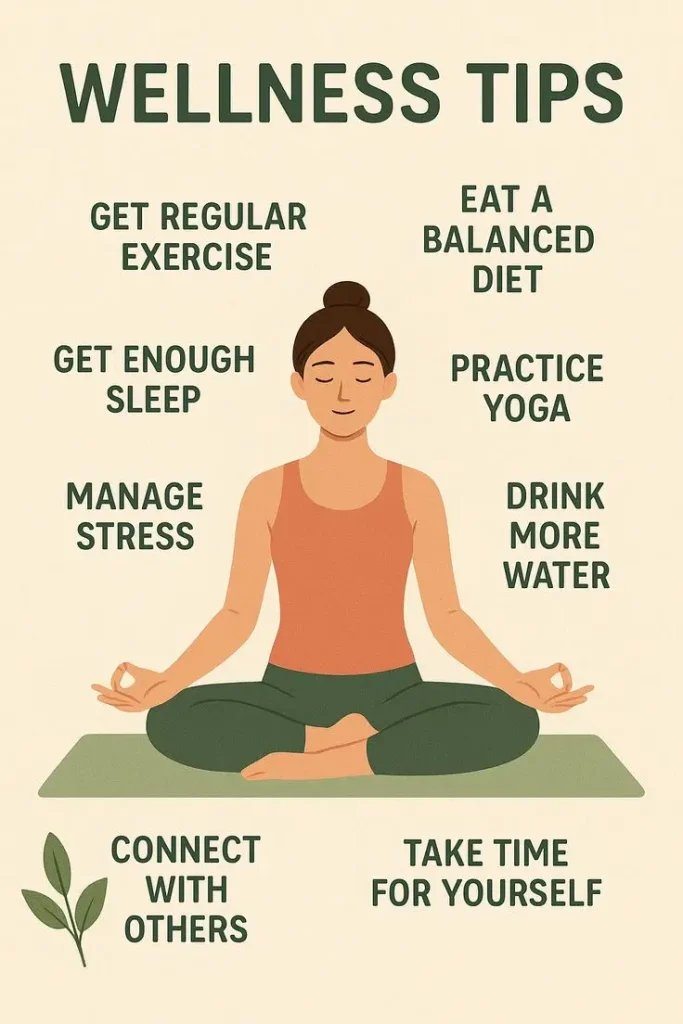
Maintaining wellness is essential for several reasons:
- Improved Physical Health: Regular wellness practices like exercise, healthy eating, and proper sleep reduce the risk of chronic diseases.
- Enhanced Mental Health: Stress management and mindfulness can improve mood, focus, and emotional stability.
- Better Productivity: When your body and mind are in balance, you can perform daily tasks more efficiently.
- Longevity: Healthy habits increase life expectancy and improve quality of life as you age.
- Resilience: Wellness practices equip you to cope better with stress, setbacks, and challenges.
Wellness also strengthens your immune system, promotes self-confidence, and allows you to enjoy life more fully. By adopting wellness tips, you are investing in a healthier, happier, and more balanced life.
Detailed Step-by-Step Guide to Wellness
1. Prioritize Physical Activity
Regular exercise is a cornerstone of wellness. It strengthens your muscles, improves heart health, and boosts your energy levels.
- Start Small: Begin with 20–30 minutes of moderate activity daily, like walking or cycling.
- Mix It Up: Include strength training, cardio, and flexibility exercises.
- Consistency Matters: Aim for at least 150 minutes of moderate-intensity activity per week.
- Listen to Your Body: Avoid overtraining; rest days are essential.
2. Eat a Balanced Diet
Nutrition plays a crucial role in overall wellness. Focus on eating a variety of foods to provide your body with essential nutrients.
- Include Whole Foods: Fruits, vegetables, whole grains, and lean proteins.
- Limit Processed Foods: Reduce sugar, refined carbs, and unhealthy fats.
- Stay Hydrated: Drink at least 8–10 glasses of water daily.
- Mindful Eating: Pay attention to hunger cues and avoid overeating.
3. Prioritize Mental Health
Mental wellness is as important as physical health. Stress management and emotional balance can enhance your life significantly.
- Practice Mindfulness: Meditation, deep breathing, or yoga can calm your mind.
- Limit Screen Time: Reduce social media use to prevent anxiety and distraction.
- Stay Socially Connected: Build supportive relationships with family and friends.
- Seek Help When Needed: Don’t hesitate to consult a professional if feeling overwhelmed.
4. Get Quality Sleep
Sleep is critical for recovery and overall well-being. Poor sleep affects mood, focus, and health.
- Set a Routine: Go to bed and wake up at the same time daily.
- Create a Sleep-Friendly Environment: Dark, quiet, and cool rooms improve sleep quality.
- Limit Caffeine and Screens: Avoid caffeine late in the day and reduce screen time before bed.
- Relax Before Bed: Reading, meditation, or gentle stretching helps signal your body to sleep.
5. Stay Hydrated
Water is essential for body functions, energy levels, and mental clarity.
- Track Your Intake: Carry a water bottle to remind yourself to drink.
- Include Hydrating Foods: Cucumbers, watermelon, and oranges add fluids.
- Avoid Sugary Drinks: Replace soda and energy drinks with water or herbal teas.
6. Manage Stress Effectively
Chronic stress can harm both your body and mind. Adopting stress management techniques is crucial.
- Practice Relaxation Techniques: Yoga, meditation, and breathing exercises.
- Organize Your Day: Plan tasks to avoid feeling overwhelmed.
- Engage in Hobbies: Activities you enjoy reduce stress naturally.
- Connect with Supportive People: Talking to loved ones helps release tension.
7. Limit Harmful Habits
Certain habits can reduce wellness and increase health risks.
- Quit Smoking: Smoking affects almost every organ in the body.
- Reduce Alcohol Intake: Limit alcohol consumption to moderate levels.
- Avoid Excessive Caffeine: Can cause anxiety and sleep problems.
- Screen Time Balance: Avoid excessive digital exposure for mental health.
8. Regular Health Check-Ups
Preventive care ensures early detection and treatment of health issues.
- Annual Physicals: Visit your doctor for routine check-ups.
- Screenings: Blood pressure, cholesterol, and blood sugar tests.
- Dental and Eye Exams: Regular visits prevent common issues.
- Vaccinations: Stay up-to-date with recommended vaccines.
9. Practice Mindful Living
Mindfulness enhances awareness and reduces stress.
- Be Present: Focus on the current moment rather than worrying about the past or future.
- Gratitude Journaling: Write down three things you’re grateful for daily.
- Positive Self-Talk: Replace negative thoughts with affirmations.
- Simplify Life: Reduce clutter and focus on what truly matters.
10. Cultivate Healthy Relationships
Social wellness affects mental and emotional health.
- Surround Yourself with Positivity: Spend time with people who uplift you.
- Communicate Openly: Honest conversations strengthen bonds.
- Set Boundaries: Protect your energy by saying no when needed.
- Support Others: Helping friends or family enhances your sense of purpose.
Benefits of Wellness
- Boosts energy levels and productivity
- Improves mental clarity and focus
- Reduces risk of chronic illnesses
- Enhances mood and emotional stability
- Strengthens immune system
- Promotes longevity and healthy aging
- Encourages better lifestyle habits
- Increases self-confidence and self-awareness
Disadvantages / Risks
- Over-exercising can lead to injuries
- Strict diets may cause nutrient deficiencies
- Ignoring mental health can worsen stress and anxiety
- Skipping sleep can impair cognitive function
- Excessive use of wellness products without guidance can harm health
- Unrealistic expectations may lead to frustration or burnout
Common Mistakes to Avoid
- Setting unrealistic goals that are hard to maintain
- Neglecting mental health while focusing on physical wellness
- Following fad diets instead of balanced nutrition
- Ignoring the importance of sleep and rest
- Over-relying on supplements instead of whole foods
- Comparing yourself to others instead of focusing on your progress
FAQs
1. How can I start practicing wellness if I’m busy?
Start small. Even 10 minutes of meditation, a short walk, or drinking more water daily can make a difference. Gradually build up healthy habits over time.
2. Are supplements necessary for wellness?
Supplements can help if you have deficiencies, but they shouldn’t replace a balanced diet. Focus on whole foods first.
3. How do I maintain wellness when stressed?
Practice mindfulness, deep breathing, and engage in hobbies. Talk to friends or a professional if stress becomes overwhelming.
4. Can wellness improve mental health?
Yes, practices like meditation, exercise, social connection, and proper sleep positively impact mental health and reduce anxiety.
5. How often should I exercise for wellness?
Aim for at least 150 minutes of moderate exercise per week. Include a mix of cardio, strength training, and flexibility exercises.
6. How do I create a sustainable wellness routine?
Start with small, realistic goals. Track your progress, stay consistent, and make adjustments as needed. Balance is key to long-term success.
7. Is wellness only about physical health?
No, wellness encompasses physical, mental, emotional, and social well-being. All these areas contribute to overall health.
8. Can wellness practices prevent diseases?
Yes, regular exercise, balanced nutrition, stress management, and preventive care significantly reduce the risk of chronic illnesses.
Expert Tips & Bonus Points
- Plan Ahead: Schedule wellness activities like workouts or meal prep in your calendar.
- Track Progress: Keep a journal to monitor your habits and improvements.
- Stay Flexible: Life changes; adapt your wellness routine accordingly.
- Mix Physical and Mental Wellness: Balance exercise with mindfulness or meditation.
- Reward Yourself: Celebrate milestones to maintain motivation.
- Use Technology Wisely: Fitness apps or reminders can help track goals but avoid screen overuse.
Conclusion
Wellness is a lifelong journey that requires consistent effort, awareness, and dedication. By adopting these wellness tips, you can create a balanced lifestyle that supports your physical, mental, and emotional health. Even small changes can lead to significant improvements over time.
Remember, wellness is not about perfection but about progress. Focus on creating sustainable habits, listening to your body, and prioritizing your health. With commitment and patience, you can achieve a healthier, happier, and more fulfilling life.